FAA Part 108 readiness
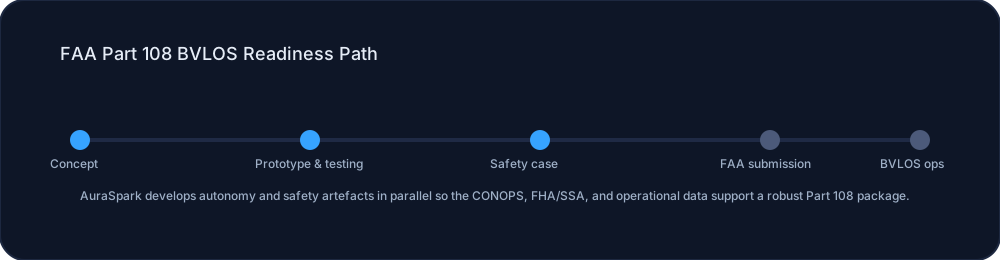
Routine BVLOS operations require more than aircraft performance. They require a defensible operational model: a clear CONOPS, safety-driven autonomy behaviors, and evidence artifacts that support oversight and review.
Readiness pillars
Safety & autonomy
- Detect-and-avoid and deconfliction logic
- Fallback and fail-safe behaviors
- End-to-end health monitoring and state reporting
CONOPS & safety case
- Concept of Operations (CONOPS) tailored to the mission
- Hazard analysis and risk mitigations mapped to procedures and system behaviors
- Operational envelopes and clear decision boundaries
Audit-ready artifacts
- Telemetry logs designed for reconstruction
- Provenance of decisions and system states
- Post-flight review workflows that improve safety over time
How AuraSpark helps
Engineering aligned with documentation
We treat evidence as a first-class output. That means the autonomy stack and the flight platform are designed to generate the artifacts you will eventually need for confident operations and regulatory review.
No overclaims
We share public information at a high level. When deeper diligence is needed, we work under a mutual NDA and align on what is appropriate to disclose.
Detailed technical background
Looking for the deeper context behind Part 108—definitions, roles, approval paths, and why evidence and auditability matter? The technical background includes a traceability matrix mapping common Part 108 expectations to AuraSpark enabling patterns.